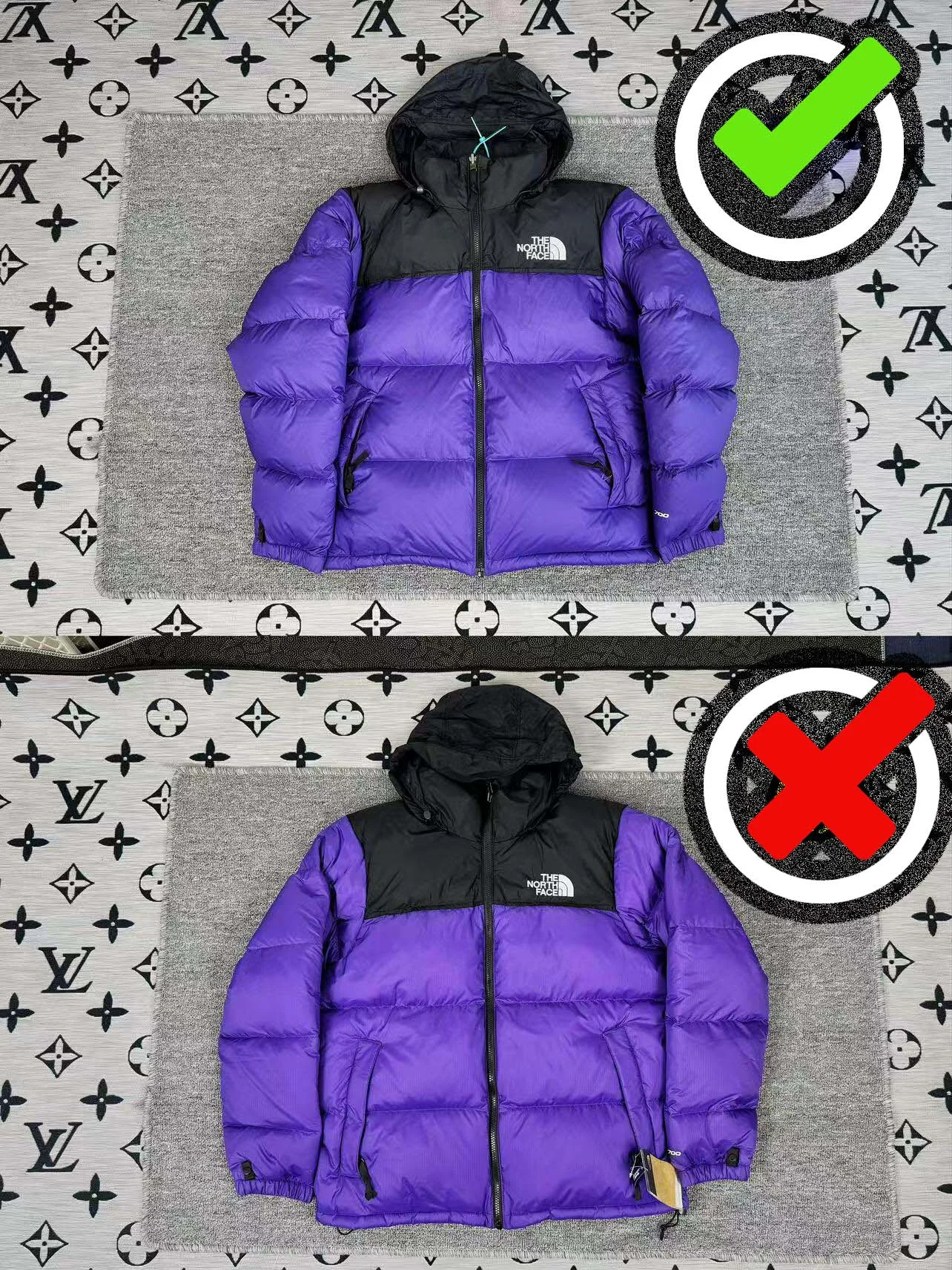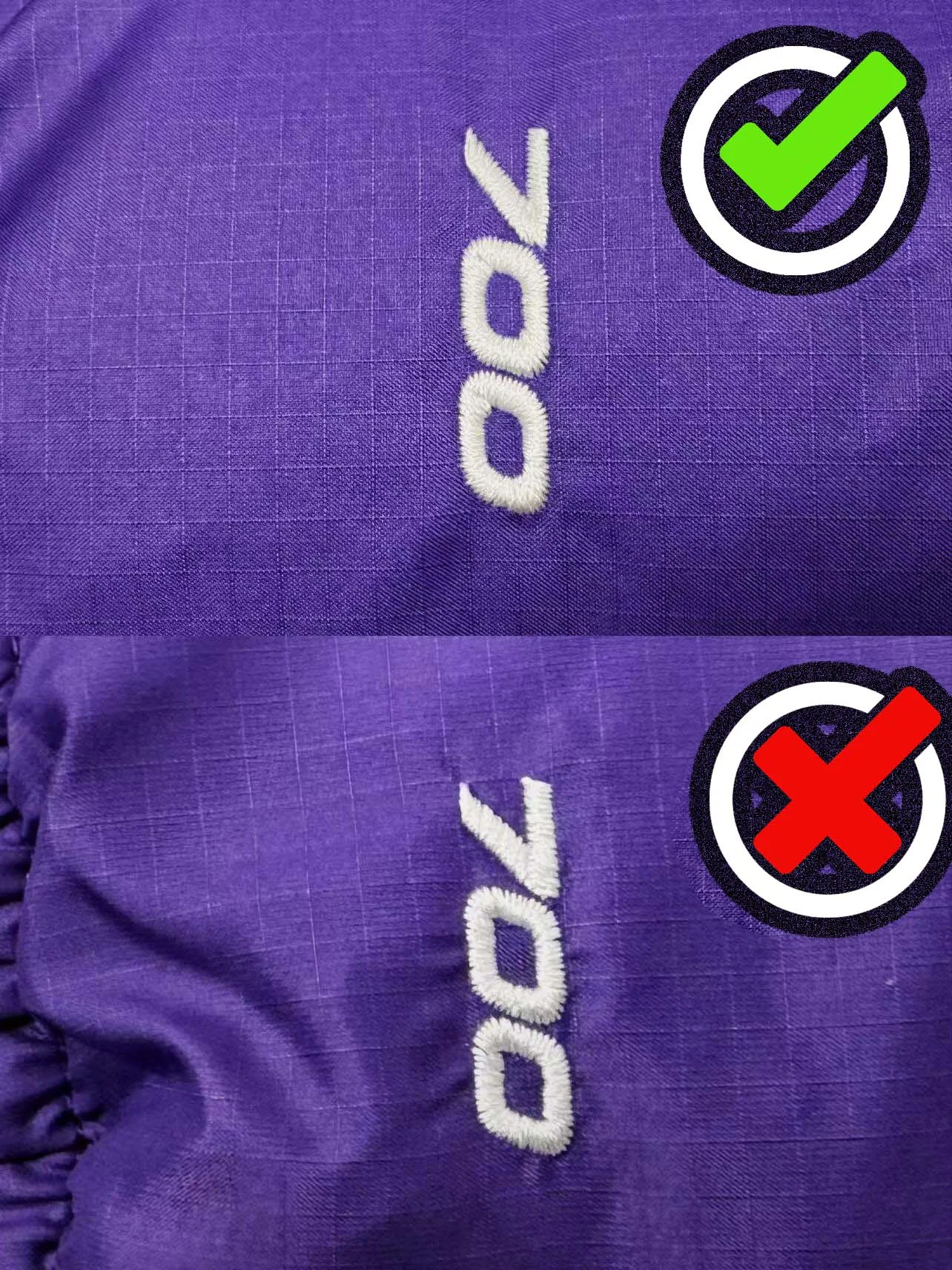
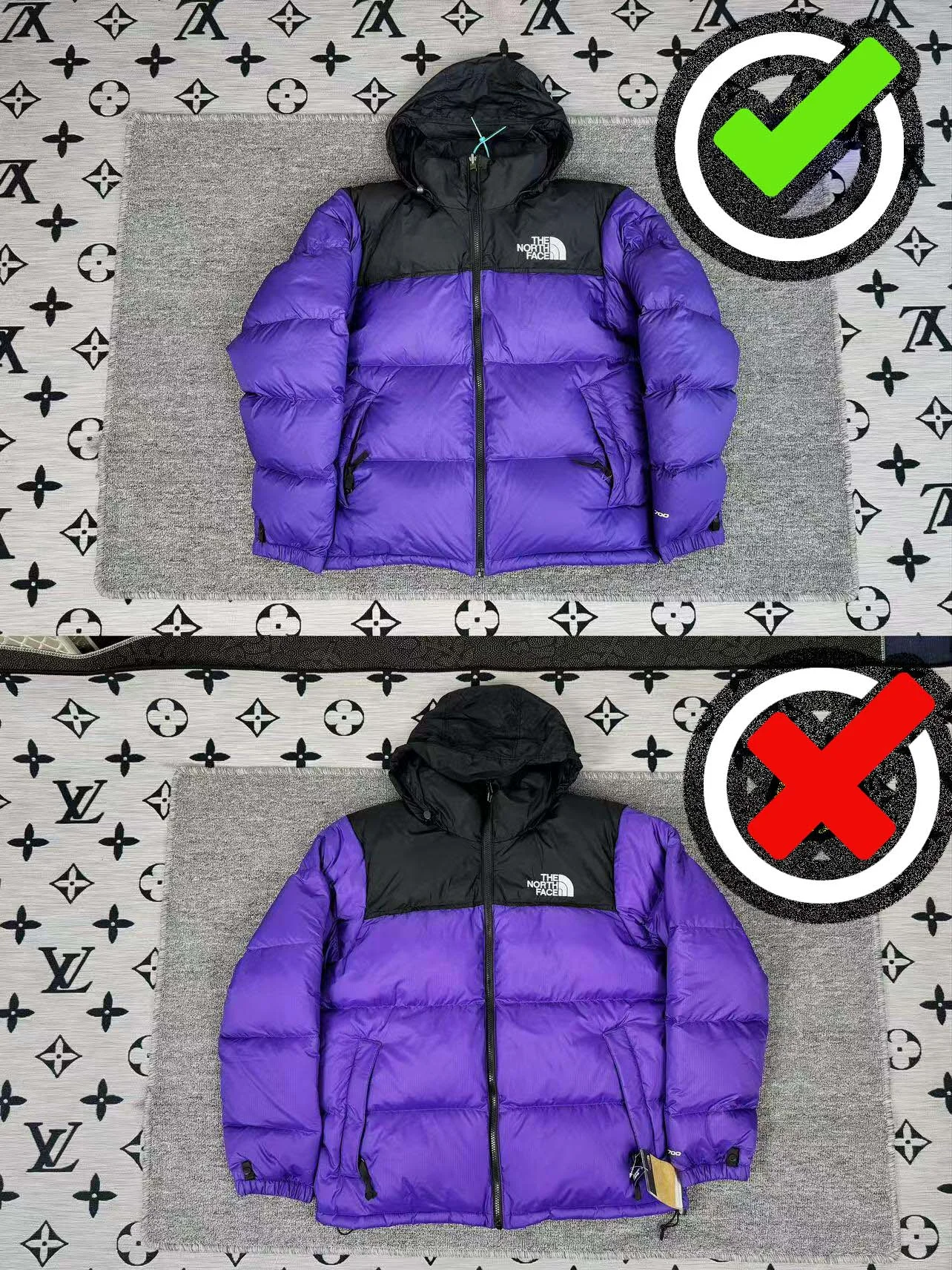
The North Face is a legend in the world of outdoor gear, but its popularity means the market is flooded with counterfeits. That cheap deal online can quickly turn into a disappointment when a low-quality replica The North Face shows up at your door. This no-nonsense guide will walk you through the key details to check, helping you identify a fake The North Face down jacket and ensure you’re getting the real, performance-driven gear you paid for.
1. The Price Tag & Main Tag: Your First Reality Check
Let’s be real: if the price seems too good to be true, it probably is. A genuine The North Face down jacket retails for around $200 and rarely dips below $150, even on sale. A rock-bottom price is the biggest red flag for a replica The North Face jacket.
Also, check the main hangtag. Authentic jackets have tags with official style codes. Be very suspicious of any hangtag that has a printed dollar price. Legitimate items sold through standard retailers don’t come with price tags from the factory.
2. Fabric, Stitching & Embroidery: The Feel and the Details
Hold the jacket and look closely. A real TNF jacket is built to last, and it feels like it.
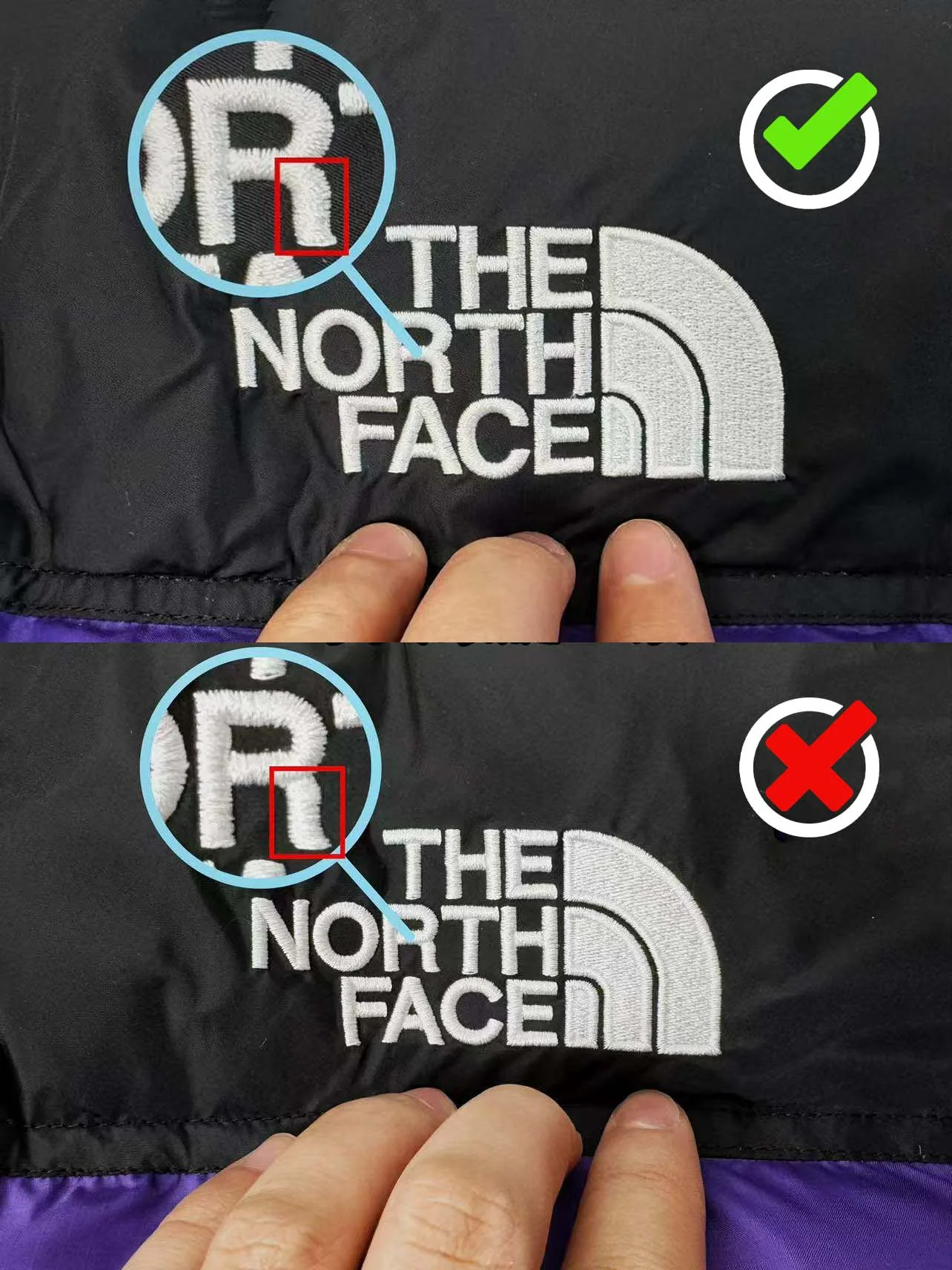
- Embroidery: Look at the logo embroidery. Authentic stitching is clean, tight, and precise. On a fake The North Face down jacket, you’ll often see excessive “thread bridges” connecting the letters in the logo. While a single loose thread can happen on a real item, a mess of connecting threads is a classic sign of a counterfeit.
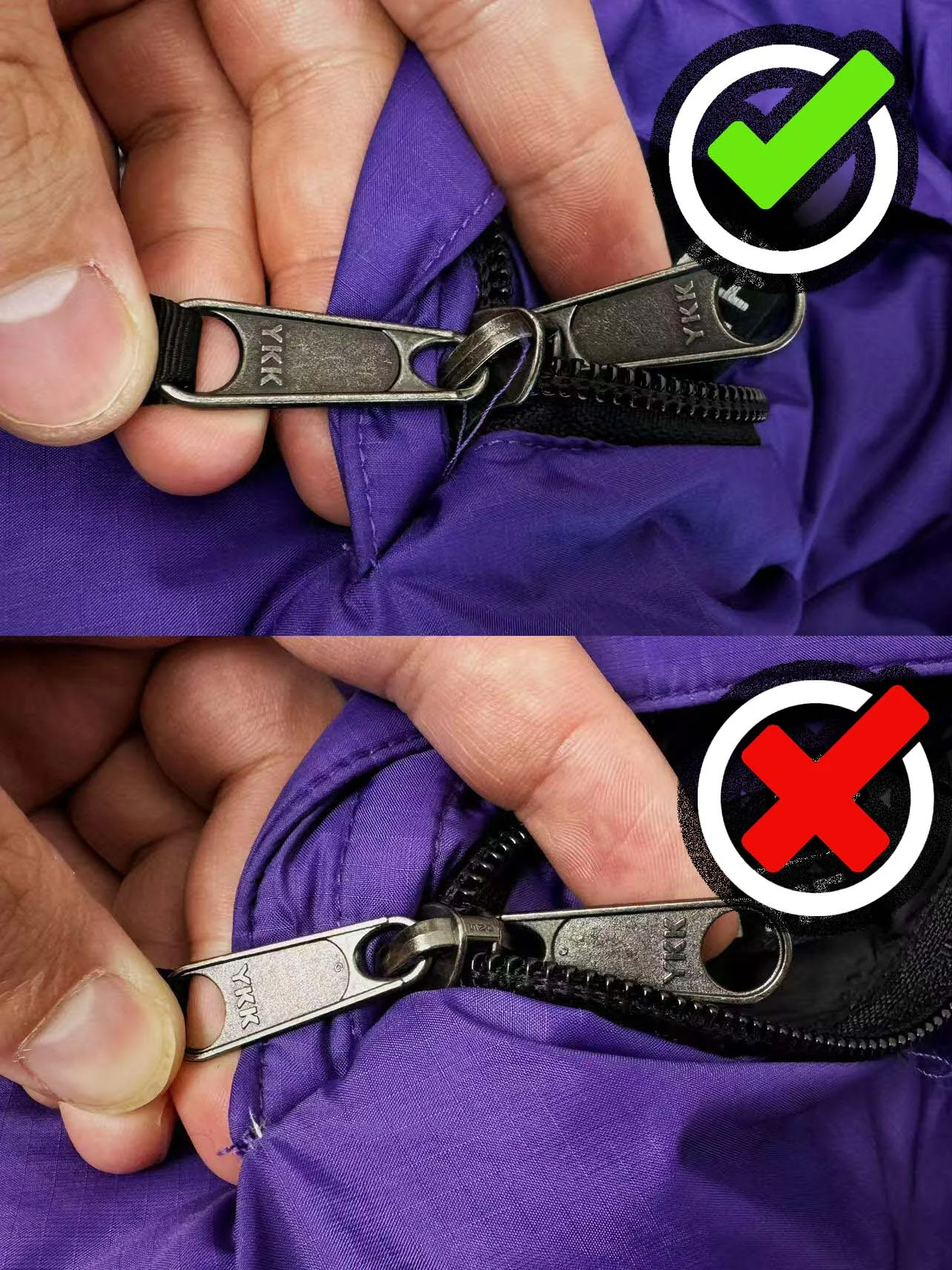
- Zippers: The North Face heavily uses high-quality YKK VISLON 5VS zippers. These have a distinct, durable coating and a specific sheen that’s hard for fakes to replicate. A cheap, flimsy, or unmarked zipper is a dead giveaway.
3. The Wash Tag: The Ultimate Test
The wash tag is one of the most reliable places to spot a fake.
- Material and Feel: A genuine TNF wash tag is thermally printed, making the text exceptionally sharp. The tag is usually folded and stitched shut at the edges, with the two layers firmly bonded together. You shouldn’t be able to peel them apart, even when wet. On a replica The North Face, the tag is often poorly printed, and the layers may separate after washing.
- The Heat Test (Use Caution): This is a well-known trick. Gently warm the wash tag with a hairdryer or lighter (from a safe distance!). An authentic tag will temporarily turn a grayish color and then return to its original off-white/light pink shade as it cools. Fakes typically won’t react this way.
4. The Hang Loop & Hologram
- Hang Loop: Feel the braided hang loop inside the collar. The real one is strong, densely woven, and has a unique “soft but strong” texture. Fakes often have a flimsy, overly stiff, or cheap-feeling loop.
- Holographic Tag: Newer jackets feature a complex holographic tag. The central design depicts the North Face of Everest. Look for the two security boxes on the sides. The left one has a holographic TNF logo, and the right one has a small logo and three letters. Tilt the tag; these elements should be clear and shift visibly. A flat, static sticker is a sure sign of a counterfeit.
Finally, I’ll share some pictures at the end of the article showing the subtle differences between genuine and fake North Face down jackets.